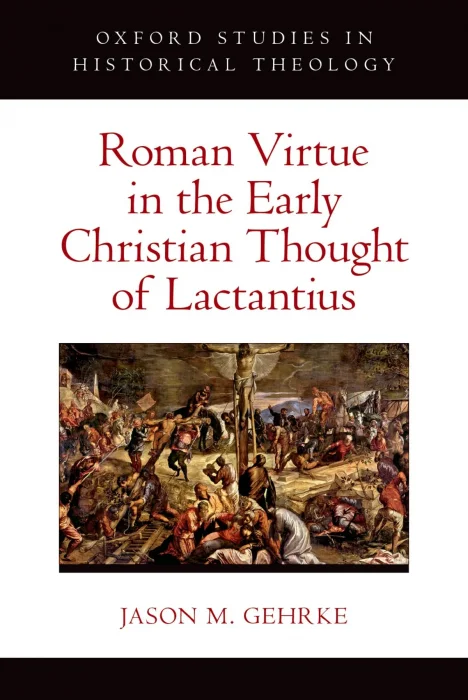
Roman Virtue in the Early Christian Thought of Lactantius (Oxford Studies in Historical Theology)
Published June 3rd, 2025
ISBN 0197667759
Language English
Pages 351
Formats EPUB True PDF
Add favorites
Known since the Renaissance as the "Christian Cicero," Lucius Caecilius Firmianus Lactantius was a professor of Latin rhetoric, Christian apologist, and theologian at the court of Emperor Constantine. In this historical study, Jason M. Gehrke examines the central notion of virtus in Lactantius's major work, The Divine Institutes of the Christian Religion.
This book begins by tracing the reception of classical Roman political and philosophical arguments about divine virtus from their classical sources into the apologetic, exegetical, and doctrinal writings of Lactantius's predecessors ― Tertullian, Minucius Felix, and Cyprian. Recognition of their influence illuminates the fundamental notion of virtus that animates Lactantius's doctrine of God and his Christology. In this context, Lactantius's account of divine virtus revealed in Christ indicates the profound influence of classical Roman literature, philosophy, and politics upon the development of Christian thought in the third-century Latin West.
Lactantius's Christology provides the immediate basis for his attempt to correct and reform classical Roman thinking about moral and political order. Gehrke thus examines Lactantius's arguments about wealth, sexuality, and warfare to show their intimate connection to his Christology and scriptural exegesis. In this account, Gehrke argues, Lactantius attempts a comprehensive synthesis of third century Latin Christian thinking about Christ's revelation and its implications for ethics and politics.
Roman Virtue in the Early Christian Thought of Lactantius thus presents The Divine Institutes as the first programmatic expression of early Latin Christian political theology in the Constantinian era. By attending to the traditional character of his arguments, this work provides a new basis for historical accounts of Lactantius and his contributions to Christianity in the pivotal era of Constantine's rise.
Foreword by Anthony Briggman.
This book begins by tracing the reception of classical Roman political and philosophical arguments about divine virtus from their classical sources into the apologetic, exegetical, and doctrinal writings of Lactantius's predecessors ― Tertullian, Minucius Felix, and Cyprian. Recognition of their influence illuminates the fundamental notion of virtus that animates Lactantius's doctrine of God and his Christology. In this context, Lactantius's account of divine virtus revealed in Christ indicates the profound influence of classical Roman literature, philosophy, and politics upon the development of Christian thought in the third-century Latin West.
Lactantius's Christology provides the immediate basis for his attempt to correct and reform classical Roman thinking about moral and political order. Gehrke thus examines Lactantius's arguments about wealth, sexuality, and warfare to show their intimate connection to his Christology and scriptural exegesis. In this account, Gehrke argues, Lactantius attempts a comprehensive synthesis of third century Latin Christian thinking about Christ's revelation and its implications for ethics and politics.
Roman Virtue in the Early Christian Thought of Lactantius thus presents The Divine Institutes as the first programmatic expression of early Latin Christian political theology in the Constantinian era. By attending to the traditional character of his arguments, this work provides a new basis for historical accounts of Lactantius and his contributions to Christianity in the pivotal era of Constantine's rise.
Foreword by Anthony Briggman.
Download Roman Virtue in the Early Christian Thought of Lactantius (Oxford Studies in Historical Theology)
Similar books
Information
Users of Guests are not allowed to comment this publication.
Users of Guests are not allowed to comment this publication.