The Most Awful Responsibility: Truman and the Secret Struggle for Control of the Atomic Age
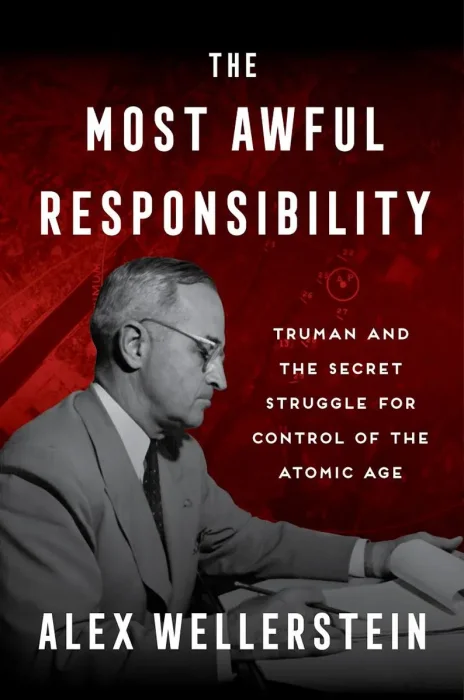
Published December 9th, 2025
ISBN 0063379430
Language English
Pages 432
Formats EPUB
Add favorites
"I thought I knew the story but learned much that I didn't know. Outstanding!"— Richard Rhodes
"This is historical research at its best." — Dan Carlin
President Truman's choice to drop the atomic bomb is the most debated decision in the 20th Century. But what if Truman's actual decision wasn't what everyone thinks it was?
The conventional narrative is that American leaders had a choice: Invade Japan, which would have cost millions of Allied and Japanese lives, or instead, use the atom bomb in the hope of convincing Japan to surrender. Truman, the story goes, carefully weighed the pros and cons before deciding that the atomic bomb would be used against Japanese cities, as the lesser of two evils.
But nuclear historian Alex Wellerstein argues that is not what happened.
Not only did Truman not take part in the decision to use the bomb, but the one major decision that he did make was a very different one — one that he himself did not fully understand until after the atomic bomb was used. The weight of that decision, and that misunderstanding, became the major reason that atomic bombs have not been used again since World War II.
Based on a close reading of the historical record, The Most Awful Responsibility shows that, despite his reputation as an ardent defender of the atomic bomb, Truman:
• Wanted to avoid the "murder" and "slaughter" of innocent civilians
• Believed that the atomic bomb should never be used again
• Hoped that nuclear weapons would be outlawed in his lifetime
Wellerstein makes a startling case that Truman was possibly the most anti-nuclear American president of the twentieth century, but his ambitions were strongly constrained by the domestic and international politics of the postwar world and the early Cold War. This book is a must-read for all who want to truly understand not only why the bomb was dropped on Japan but also why it has not been used since.
"This is historical research at its best." — Dan Carlin
President Truman's choice to drop the atomic bomb is the most debated decision in the 20th Century. But what if Truman's actual decision wasn't what everyone thinks it was?
The conventional narrative is that American leaders had a choice: Invade Japan, which would have cost millions of Allied and Japanese lives, or instead, use the atom bomb in the hope of convincing Japan to surrender. Truman, the story goes, carefully weighed the pros and cons before deciding that the atomic bomb would be used against Japanese cities, as the lesser of two evils.
But nuclear historian Alex Wellerstein argues that is not what happened.
Not only did Truman not take part in the decision to use the bomb, but the one major decision that he did make was a very different one — one that he himself did not fully understand until after the atomic bomb was used. The weight of that decision, and that misunderstanding, became the major reason that atomic bombs have not been used again since World War II.
Based on a close reading of the historical record, The Most Awful Responsibility shows that, despite his reputation as an ardent defender of the atomic bomb, Truman:
• Wanted to avoid the "murder" and "slaughter" of innocent civilians
• Believed that the atomic bomb should never be used again
• Hoped that nuclear weapons would be outlawed in his lifetime
Wellerstein makes a startling case that Truman was possibly the most anti-nuclear American president of the twentieth century, but his ambitions were strongly constrained by the domestic and international politics of the postwar world and the early Cold War. This book is a must-read for all who want to truly understand not only why the bomb was dropped on Japan but also why it has not been used since.
Download The Most Awful Responsibility: Truman and the Secret Struggle for Control of the Atomic Age
Similar books
Information
Users of Guests are not allowed to comment this publication.
Users of Guests are not allowed to comment this publication.