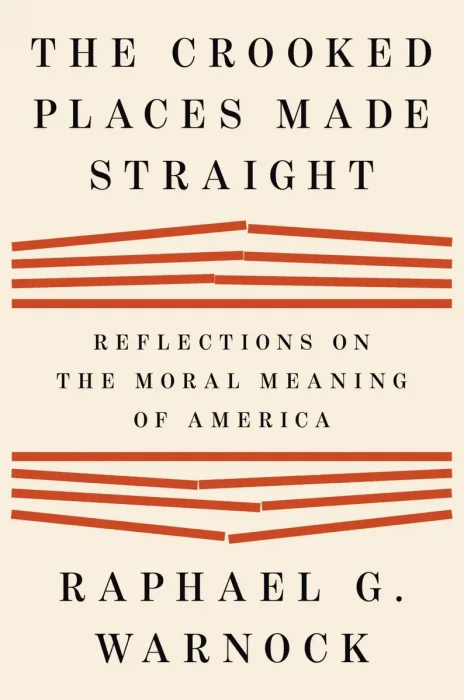
The Crooked Places Made Straight: Reflections on the Moral Meaning of America
Published June 16th, 2026
ISBN 9798217058983
Language English
Pages 224
Formats EPUB
Add favorites
Named a Most Anticipated Book of 2026 by The New York Times
From Senator Reverend Raphael G. Warnock, a sermon in the public square on the issues that plague us most
Senator Reverend Raphael G. Warnock is a transformational voice in Congress and the pastor of Martin Luther King, Jr.’s Ebenezer Baptist Church, and for the semiquincentennial of America, he exhorts us to reach for the highest and noblest aspects of our national character. Senator Warnock argues that we suffer not from a paucity of resources but from a poverty of moral imagination.
His sermon on the book of Isaiah draws from ideals resonant in his own faith and all the great faiths and other moral traditions, offering a bold vision of how to live and relate to one another in the land. A moral topography, he calls it, a geopolitics that centers love and justice, or as Dr. King would so often say, the beloved community. The Crooked Places Made Straight examines six crises at the center of American life: voting rights and voter suppression, gun violence, mass incarceration, the persistence of poverty, dark money in politics, and the climate emergency.
This is not a naive faith, either. As Senator Warnock writes: Isaiah is no stranger to frustration with institutional leadership. He knows well the perils of public corruption, sophisticated legalized bribery, and a political class more interested in preserving its own power than in serving the people. . . . He’s fed up with political leaders who are focused on their own gain at the expense of the people. “Your princes are rebels and companions of thieves,” he says.
For Senator Warnock, democracy is the political enactment of a spiritual idea. A vote is a kind of prayer. The Crooked Places Made Straight is his inspiring vision for a more just and equitable America where communities thrive with hope and possibility and every child has a chance.
From Senator Reverend Raphael G. Warnock, a sermon in the public square on the issues that plague us most
Senator Reverend Raphael G. Warnock is a transformational voice in Congress and the pastor of Martin Luther King, Jr.’s Ebenezer Baptist Church, and for the semiquincentennial of America, he exhorts us to reach for the highest and noblest aspects of our national character. Senator Warnock argues that we suffer not from a paucity of resources but from a poverty of moral imagination.
His sermon on the book of Isaiah draws from ideals resonant in his own faith and all the great faiths and other moral traditions, offering a bold vision of how to live and relate to one another in the land. A moral topography, he calls it, a geopolitics that centers love and justice, or as Dr. King would so often say, the beloved community. The Crooked Places Made Straight examines six crises at the center of American life: voting rights and voter suppression, gun violence, mass incarceration, the persistence of poverty, dark money in politics, and the climate emergency.
This is not a naive faith, either. As Senator Warnock writes: Isaiah is no stranger to frustration with institutional leadership. He knows well the perils of public corruption, sophisticated legalized bribery, and a political class more interested in preserving its own power than in serving the people. . . . He’s fed up with political leaders who are focused on their own gain at the expense of the people. “Your princes are rebels and companions of thieves,” he says.
For Senator Warnock, democracy is the political enactment of a spiritual idea. A vote is a kind of prayer. The Crooked Places Made Straight is his inspiring vision for a more just and equitable America where communities thrive with hope and possibility and every child has a chance.
Download The Crooked Places Made Straight: Reflections on the Moral Meaning of America
Similar books

Information
Users of Guests are not allowed to comment this publication.
Users of Guests are not allowed to comment this publication.